


Architecture Principle: Data gravity creates financial gravity. Your baseline cost is dictated by data mass; your multipliers are dictated by routing.
This repository contains architectural models, Terraform decision frameworks, and cloud economics patterns used to evaluate data movement costs, egress exposure, cloud repatriation scenarios, and exit readiness.
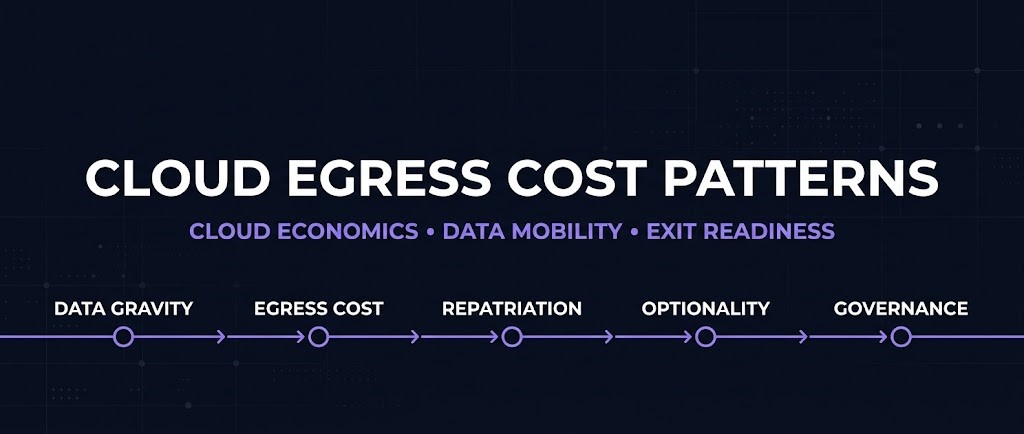
- https://www.rack2cloud.com/cloud-egress-costs-explained/
- https://www.rack2cloud.com/physics-of-data-egress/
- https://www.rack2cloud.com/cloud-exit-strategy/
- https://www.rack2cloud.com/exit-cost-architecture/
- https://www.rack2cloud.com/cloud-repatriation-calculus/
- https://www.rack2cloud.com/cloud-repatriation-when-to-move-workloads-on-prem/
- https://www.rack2cloud.com/vendor-lock-in-networking-not-apis/
- https://www.rack2cloud.com/infrastructure-control-plane-consolidation/
- https://www.rack2cloud.com/shadow-control-plane/
- https://www.rack2cloud.com/private-cloud-operating-model/
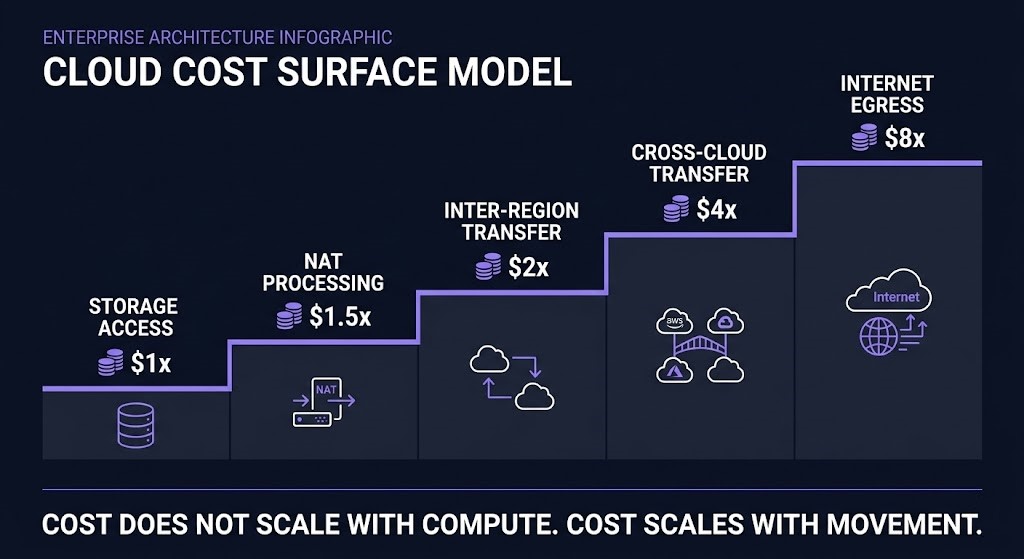
Cloud cost overruns are often attributed to compute consumption but frequently originate from data movement topology.
Architectures that route storage traffic through NAT Gateways, cross-region links, service meshes, or unnecessary inspection layers create compounded transfer costs that scale with data volume rather than workload complexity.
This repository models those cost surfaces and provides routing guidance intended to minimize unnecessary egress exposure.
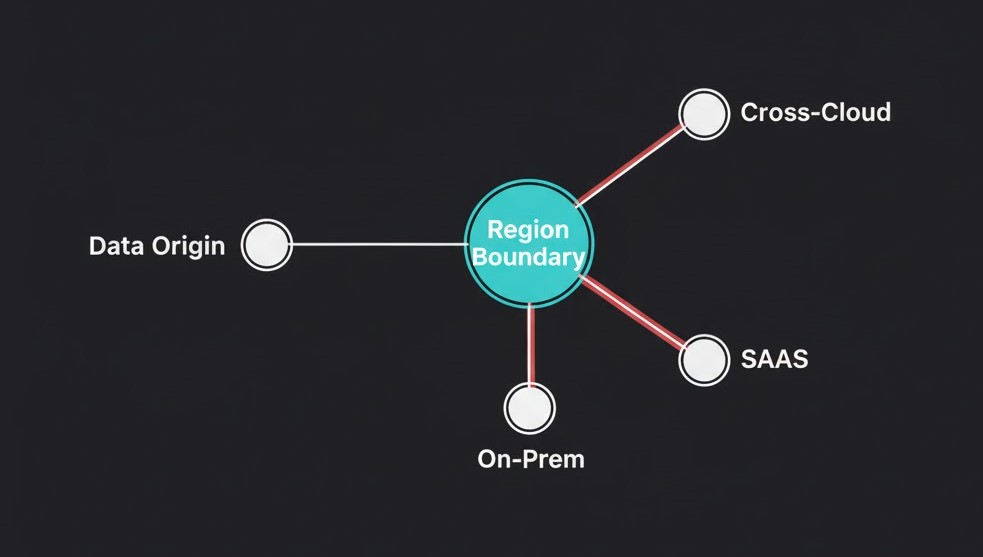
The model treats every data transfer boundary as a potential cost amplification point.
- Data origin (VPC / subnet)
- Cloud-native storage
- Cross-region transfer
- Cross-cloud transfer
- Internet egress
- SaaS consumption
- On-premises connectivity
- NAT Gateway processing
- Inter-region transfer
- Transit Gateway processing
- Cross-provider transport
- Internet egress fees
- Third-party network services
| Scenario | Recommendation |
|---|---|
| High-volume S3 traffic inside AWS | ✅ VPC Gateway Endpoint |
| Cross-account private service access | ✅ PrivateLink |
| Public internet API access | ⚠ NAT Gateway acceptable |
| Multi-region connectivity | ✅ Transit Gateway architecture |
| Hybrid connectivity | ✅ Direct Connect / ExpressRoute evaluation |
| Large-scale analytics export | ✅ Dedicated egress modeling before deployment |
Cloud egress cost is not only a cost optimization problem.
It is also an exit readiness problem.
Organizations frequently discover that data extraction costs become a major barrier during:
- Cloud repatriation projects
- VMware exit programs
- Sovereignty initiatives
- Mergers and acquisitions
- Platform consolidation efforts
The cost of moving data often determines whether an exit remains economically viable. Cloud egress charges are frequently the first place organizations discover that architectural optionality has already been lost.
The period during which an organization retains structural optionality to exit a cloud provider without architectural reconstruction.
The window is maintained through:
- Portable data architectures
- Independent control planes
- Organization-owned observability
- Identity sovereignty
- Modeled egress economics
Once the window closes, exit becomes an architectural reconstruction exercise rather than a migration project.
Recent architecture research relevant to cloud economics and exit readiness:
- Multi-Cloud Failover Is Mostly Theater
- Cross-Region Replication Is Not Resilience
- The Infrastructure Control Plane Is Consolidating
- The Platform Team Became a Finance Team
- Idle Cost Is the New Egress Cost
- The Console Is the Shadow Control Plane
- Most Sovereignty Strategies Fail Before Architecture Begins
Published at: Cloud Architecture Strategy | Rack2Cloud
If this repository helps you evaluate cloud routing, egress exposure, repatriation planning, or exit readiness:
⭐ Star the repository
Architectural frameworks maintained by Rack2Cloud.